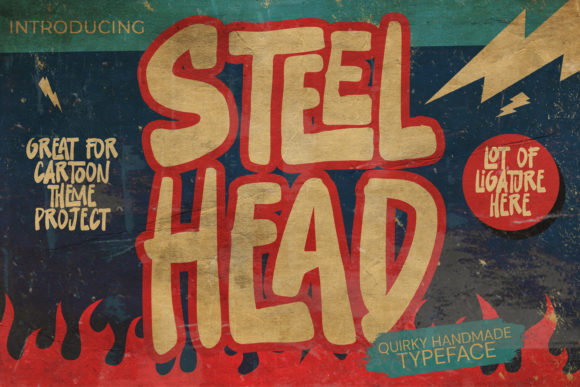
Steel Head: A Brushed Display Typeface for Edgy Branding
I opened a blank brand board on my screen, staring at the empty canvas where a new identity needed to take shape. The client wanted something raw, something that felt like it had been scrawled on a brick wall in an alleyway but still retained enough structure to be legible. That was when I pulled Steel Head from my library of creative fonts. As a brushed display font that has a creepy, street art vibe, it immediately transformed the sterile white background into something gritty and alive. After spending the last few days testing this typeface across a logo draft, a packaging mockup, and a series of social media layouts, I can confidently say that Steel Head is not just another decorative option; it is a powerful tool for brands that need to scream without shouting.
How Steel Head Performs as a Logo Font for Streetwear and Sportswear
When I first dropped Steel Head onto a concept for a sportswear brand, the result was instant impact. This display font possesses a unique texture that mimics the look of spray paint or rough brush strokes, making it an ideal choice for designs such as t-shirts, sportswear, logos, advertisements, clothing, and more. Unlike standard sans serif fonts that can feel too corporate for urban markets, Steel Head brings a rebellious energy that resonates with younger demographics. In the logo design phase, I noticed how the thick, uneven edges of the letters created a natural visual hierarchy, allowing the brand name to stand out even against complex backgrounds. However, I did find that for very small applications, like a tiny icon on a shoe tongue, the details might get lost, so it works best as a primary headline or large-scale identifier.
Why Steel Head Fits Clothing and T-Shirt Designs Perfectly
The versatility of Steel Head extends far beyond digital screens and into physical merchandise. When I tested the font on a clothing label mockup, the brushed texture gave the garment a premium, limited-edition feel that flat vector fonts simply cannot achieve. It is particularly effective for designs such as t-shirts, sportswear, logos, advertisements, clothing, and more because it handles high-contrast environments well. Whether you are creating a bold graphic tee or a subtle tag on a jacket, the font's personality adds a layer of storytelling to the product itself. For entrepreneurs selling handmade goods or running print-on-demand shops, using a creative font like this can significantly elevate the perceived value of the item, turning a simple piece of apparel into a statement piece.
Can Steel Head Be Used for Advertisements and Social Media Graphics?
In the world of digital marketing, grabbing attention within seconds is everything. I placed Steel Head on several Instagram post templates and banner ads to see how it held up in a fast-scrolling feed. The answer was a resounding yes. As a display font with a creepy, street art vibe, it stops the scroll by offering a distinct visual break from the clean, minimalist aesthetics that dominate social platforms. It is suitable for designs such as t-shirts, sportswear, logos, advertisements, clothing, and more, but its strength lies in short, punchy headlines rather than long paragraphs. I used it for event flyers and promotional banners, and the font's aggressive style helped convey urgency and excitement. Just remember that while it is excellent for eye-catching headers, it should never be used for body text or legal disclaimers where readability is paramount.
Pairing Steel Head with Other Fonts for Balanced Brand Identity
One of the most common questions I faced while building the brand board was how to pair this edgy typeface with supporting text. Because Steel Head is a brushed display font that has a creepy, street art vibe, it demands attention and can easily overpower other elements if not balanced correctly. My recommendation is to pair it with a clean, neutral sans serif font for secondary information or a modern serif font for a touch of sophistication in editorial design. For instance, when designing a website header, I used Steel Head for the main navigation title and paired it with a simple geometric sans serif for the menu links and body copy. This combination ensures that the brand remains professional while still retaining its unique character. Avoid pairing it with other script fonts or handwritten fonts, as the competition between textures can create a chaotic and unprofessional look.
What Designers Should Know Before Using Steel Head in Commercial Projects
Before finalizing any client work, it is crucial to test Steel Head thoroughly across different mediums. While the font looks fantastic on a computer monitor, printing it on various materials can reveal nuances in the brush strokes that aren't visible digitally. I recommend creating a physical proof, such as a business card or a poster, to ensure the ink coverage doesn't fill in the thinner parts of the letters. Additionally, designers must review the included styles, alternates, and ligatures provided in the file package to maximize the font's potential. Although Steel Head is suitable for designs such as t-shirts, sportswear, logos, advertisements, clothing, and more, it is strictly a display font meant for short phrases and titles. Attempting to use it for long-form content will compromise readability and dilute the brand message. Finally, always double-check the commercial font licensing terms before using the typeface in client work, brand identity systems, or print-on-demand products to avoid any legal complications.